
This article is brought to you by DiamondWatcher.com, which compares diamond prices across retailers.
HPHT vs CVD Lab-Grown Diamonds: Growth Method Differences That Actually Matter
Introduction
Most lab-grown listings name a growth method, HPHT or CVD, and it's fair to wonder whether it should change what you buy. This guide covers the differences that show up for buyers and skips the chemistry that doesn't.
How This Comparison Is Evaluated
We looked at what shows up in listings, prices and long-term confidence.
We evaluate:
- How each growth method works, at a high level
- Typical visual characteristics
- Common post-growth treatments
- Market availability and pricing
- Impact on grading and resale
We leave out rare edge cases and manufacturers' proprietary processes. Both methods produce real diamonds, so that isn't up for debate here either.
Quick Side-by-Side Overview
| Category | HPHT | CVD |
|---|---|---|
| Growth environment | High pressure, high temperature | Low pressure, gas-based plasma |
| Typical crystal shape | Cuboctahedral (a mix of cube and octahedron faces) | Flat, layered growth |
| Common color traits | May show blue/gray tones | May show brown tones pre-treatment |
| Post-growth treatment | Sometimes annealed | Often HPHT-treated after growth |
| Retail prevalence | Moderate | Very high |
| Typical pricing | Comparable, sometimes slightly higher | Comparable, often slightly lower |
What HPHT Diamonds Are
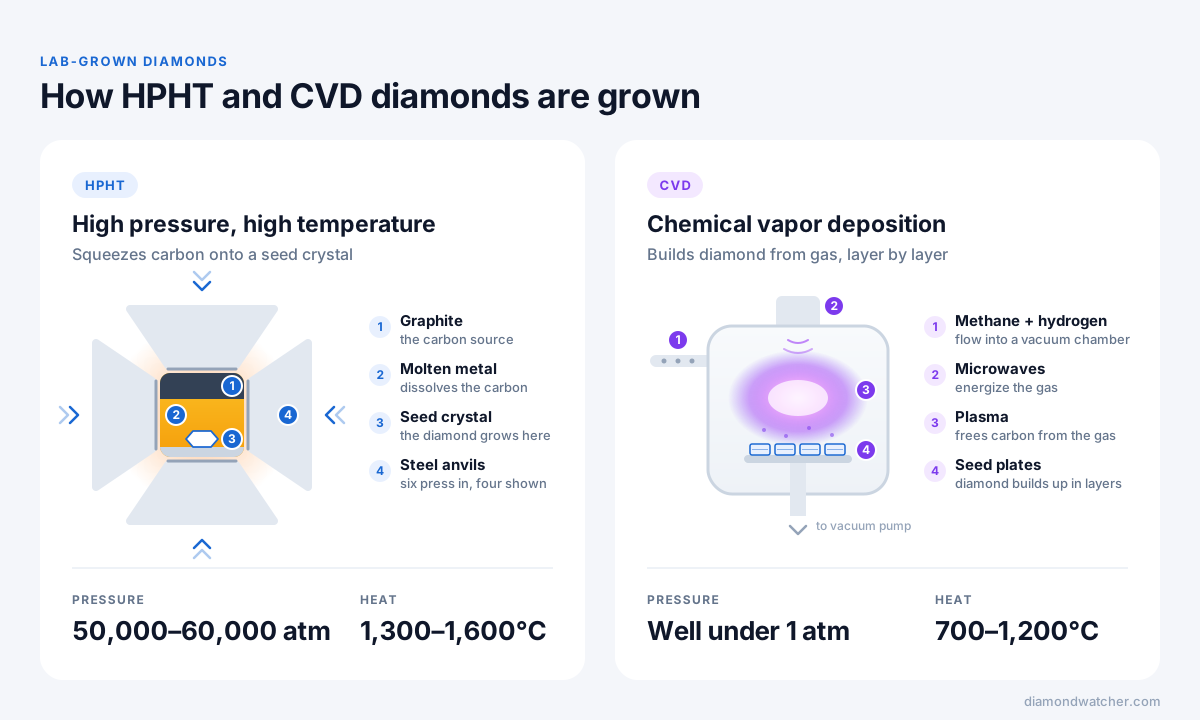
HPHT (High Pressure, High Temperature) diamonds are grown by recreating the extreme conditions that form natural diamonds. Carbon is put under intense heat and pressure, and a diamond crystal grows around a seed.
HPHT was the first commercially viable way to grow diamonds, and it's still widely used.
What CVD Diamonds Are
CVD (Chemical Vapor Deposition) diamonds grow in a low-pressure chamber filled with carbon-rich gas. The gas is energized into plasma, and carbon atoms settle layer by layer onto a diamond seed.
CVD gives producers precise control over growth, and it's now the most common method behind lab-grown diamonds sold online.
Visual Characteristics and Appearance
In a finished, well-cut diamond, most buyers can't tell HPHT from CVD without specialized equipment. There are a couple of tendencies:
- HPHT diamonds sometimes show a subtle blue or gray undertone.
- CVD diamonds can be brownish before treatment, and post-growth processing usually removes it.
Post-Growth Treatments (Important)
Many lab-grown diamonds, CVD stones especially, are treated after growth to improve color or clarity.
- CVD diamonds commonly get an HPHT treatment after growth.
- HPHT-grown diamonds may also be annealed or treated.
What matters for buyers: Treatments have to be disclosed on the grading report, and when they're done properly they're stable and permanent.
Impact on Grading and Reports
Major labs grade finished HPHT and CVD diamonds on the same standards. The report discloses the growth method, but the method doesn't set the grade. Cut quality, color and clarity drive the result.
Pricing and Market Availability
CVD diamonds dominate online inventory because the process scales efficiently.
- CVD stones are usually easier to find in a specific size and quality.
- Price differences between the two methods are small and driven by the market.
- When a gap does show up, it usually comes from availability or how the retailer positions the stone.
Resale and Long-Term Considerations
Lab-grown resale value is limited whichever method grew the stone, and secondary buyers look at overall appearance and paperwork more than HPHT vs CVD. If growth method matters to you at all, it matters when you buy.
Which Is Better for Which Buyer?
HPHT may be better if you:
- Like the idea of a stone grown under conditions closer to nature
- Have already found a specific stone with strong images and video
- Don't mind a narrower selection
Choose CVD when you:
- Want the widest selection across retailers
- Are comparing many listings online
Common Myths and Misconceptions
- "One method produces fake diamonds." Both produce real diamonds.
- "HPHT is always better." Quality varies by stone, whatever the growth method.
- "Treated diamonds are inferior." Properly disclosed treatments are standard and stable.
Final Takeaway
Pick the lab-grown stone on its cut, color, clarity, video and price, and treat HPHT vs CVD as a line on the report. If two stones are otherwise equal, take whichever is cheaper. Make sure any post-growth treatment is disclosed.
How DiamondWatcher Helps You Compare in Practice
DiamondWatcher pulls lab-grown listings from multiple retailers into one search, whatever the growth method.
- See how HPHT and CVD stones are priced in the real market
- Compare visuals and specs side by side
- Avoid paying extra because of a growth-method myth
Explore live comparisons at https://diamondwatcher.com